
Ikenobo School
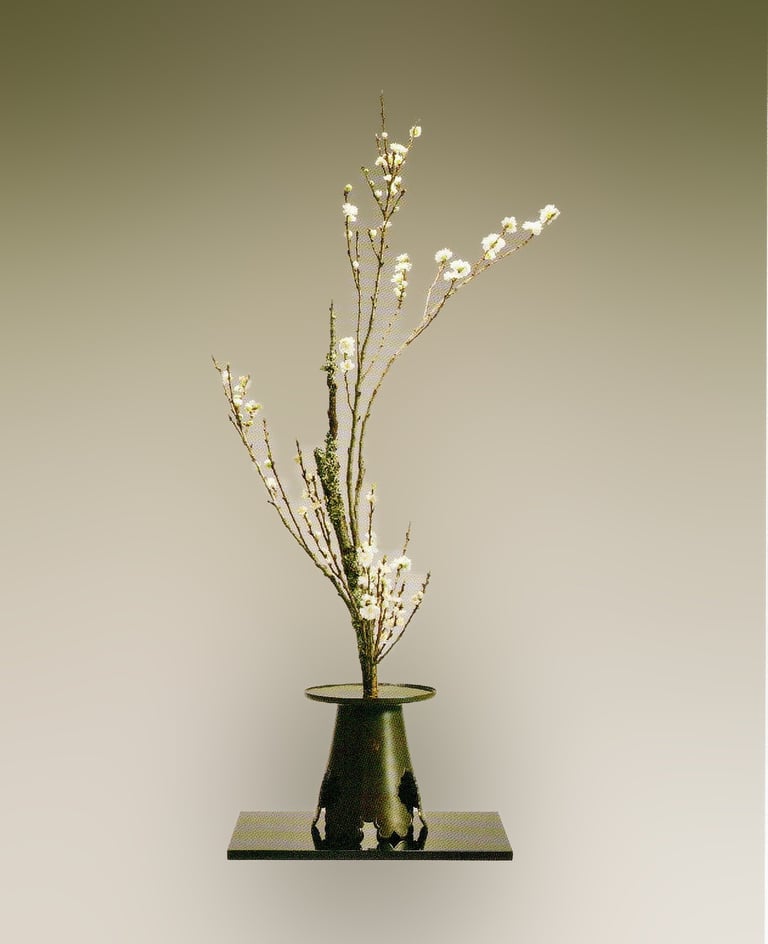
With a history spanning over five centuries, the Ikenobō (池坊) is recognised as the birthplace of Japanese flower arranging. Its origins trace back to Kyoto’s Rokkaku-dō Temple, where Buddhist monks first offered flowers at the altar, living near a pond called ike in a small hut, or bō. The monks became known as Ikenobō, giving the school its name.
The school’s formal teachings began in the late Muromachi period under Ikenobō Senno, who documented the philosophy of ikebana in Senno Kuden and established the rikka style, a formal arrangement representing natural landscapes, emphasising structure, symbolism, and a sense of grandeur. In the 18th century, the simplified shōka style emerged, focusing on the natural character of plants, seasonal harmony while following traditional rules.
Over the centuries, generations of Ikenobō headmasters (Iemoto) have preserved and evolved these traditions. Today, the school continues to teach rikka and shōka, honouring its centuries-old heritage while inspiring students to experience ikebana as a living dialogue with nature.
Learn more about Ikenobō School at
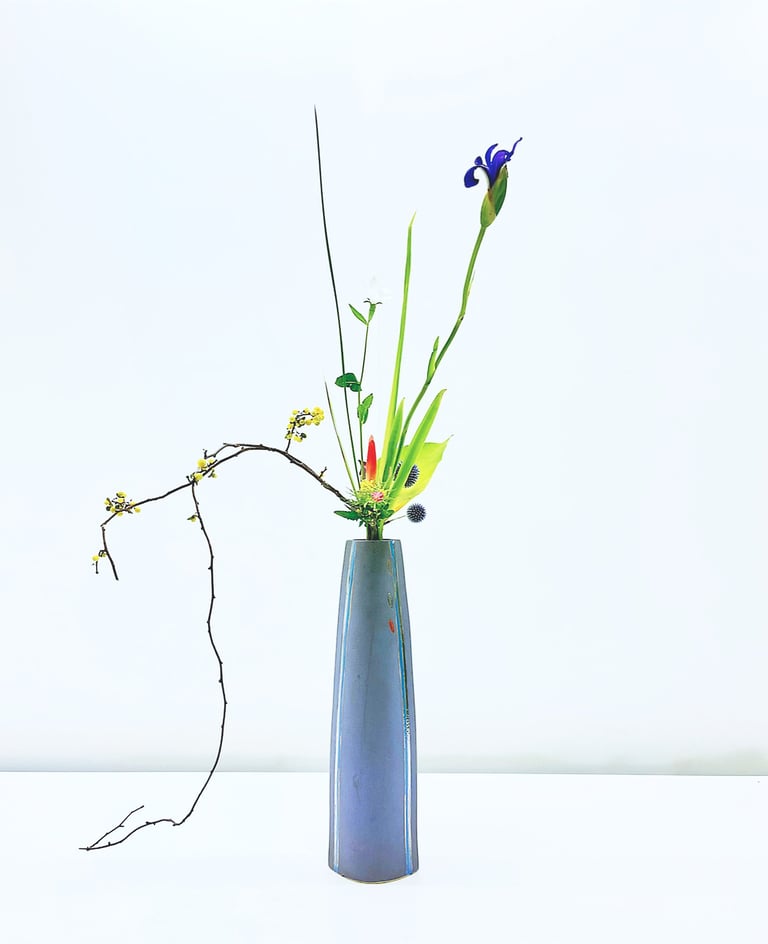
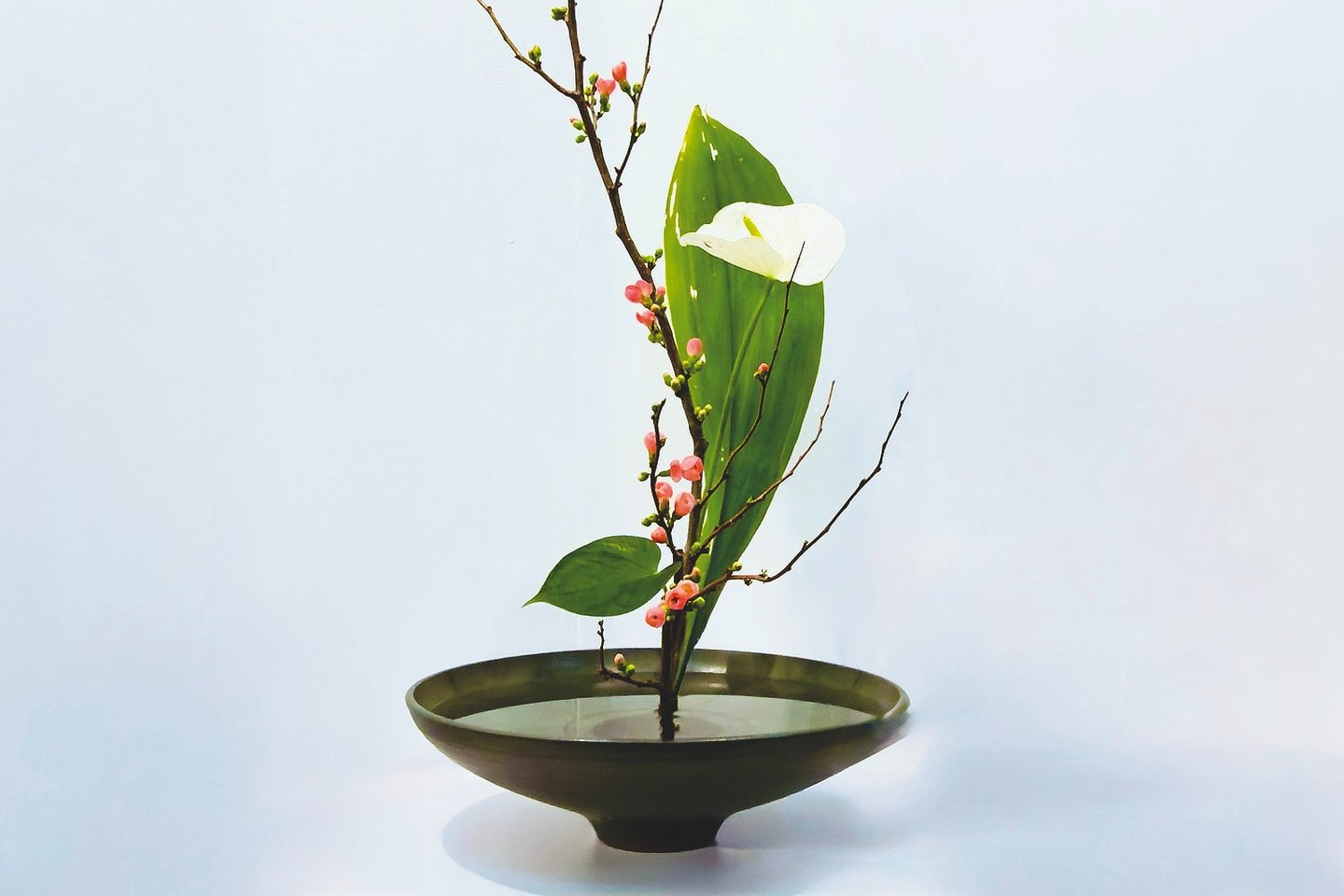
Shoka Shofutai
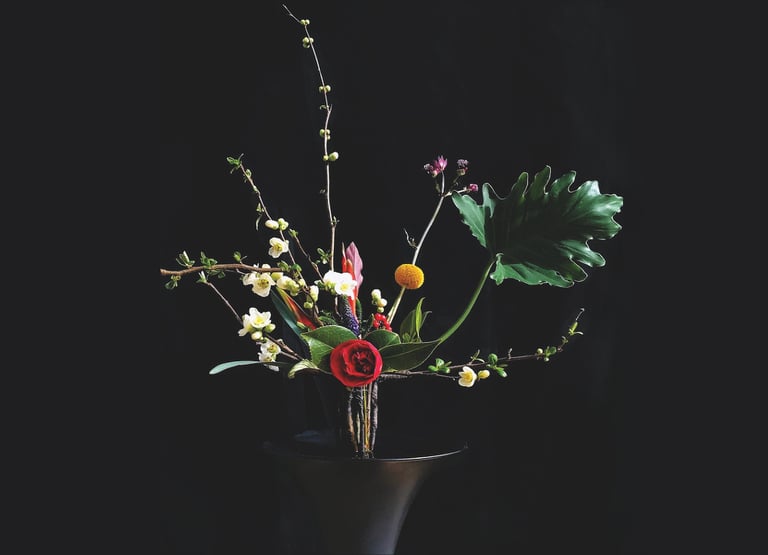
Rikka Shimputai by Rie Kuchina-Day

Ikebana Practitioners
Explore the essence of Ikebana with experienced practitioners, each passionate about sharing the tactile art they've practised for years. Whether you're starting out or deepening your practice, they offer structured school curriculums or hands-on workshops to guide and inspire you every step of the way.
© 2025 Ikebana International London Chapter. All rights reserved.