Ryusei-ha
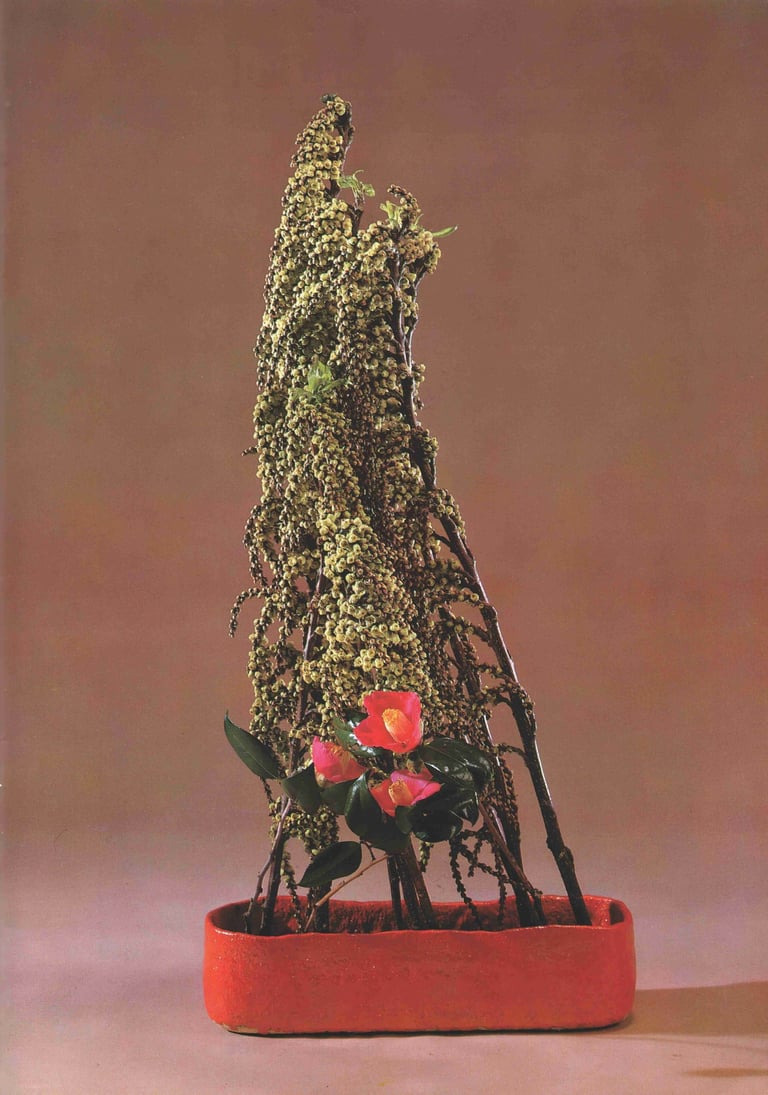
Founded in 1886 by Yoshimura Kaun, Ryūsei-ha (龍生派) takes its name from Okazaki Castle in Aichi Prefecture, also known as “Dragon Castle,” the birthplace of the school’s first headmaster, symbolising strength, vitality, and inspiration.
During the dynamic Meiji era, Yoshimura sought to move beyond the conventions of traditional Ikenobō Ikebana to reveal the natural individuality and beauty of each flower and branch. Establishing Ryūsei-ha in Tokyo, he envisioned Ikebana as a harmonious balance between structure and creativity, reflecting both classical discipline and modern artistic spirit.
Ryusei-ha offers a range of approaches. rikka is the oldest and most traditional method, developed for offering in Buddhist temples. It emphasises structure, symbolism, and a sense of grandeur. shōka (seika) is a formal Edo-period style focusing on simplicity, balance, and harmony while following traditional rules. jiyū-ka is a freestyle approach, blending classical elements with the practitioner’s artistic vision, creating arrangements that are personal and expressive.
Learn more about Ryūsei-ha at ryuseiha.net
*photo credits Ikebana International magazine
Ikebana by Kasen Yoshimura, the 1st Iemoto*
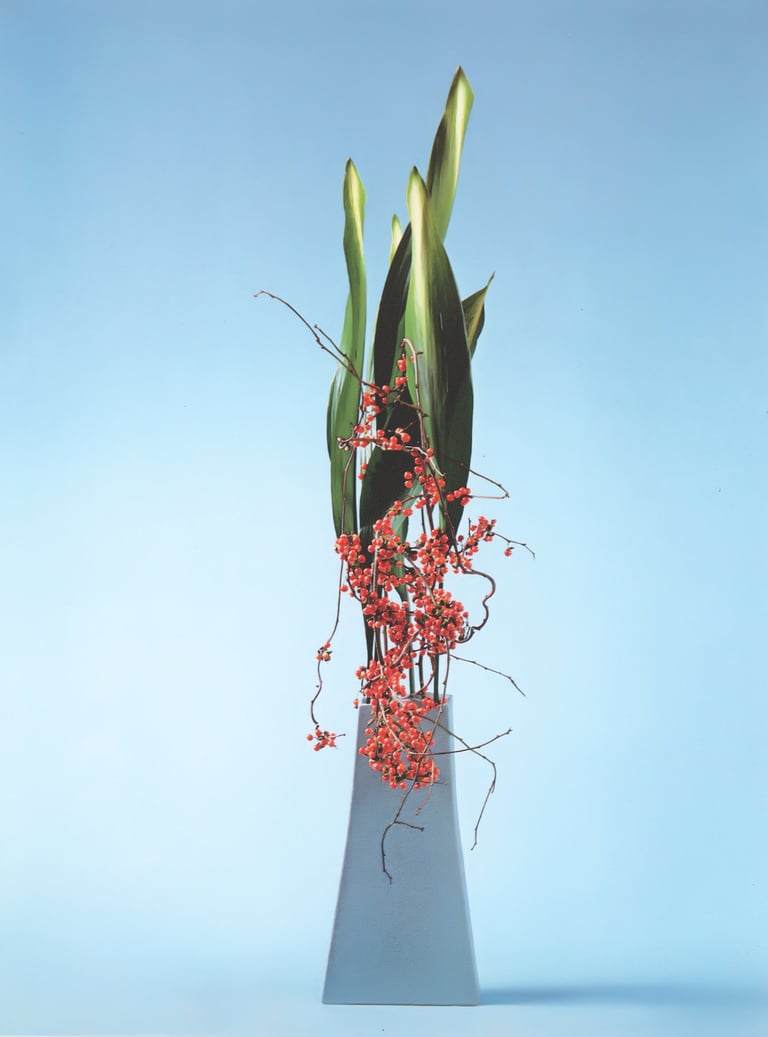
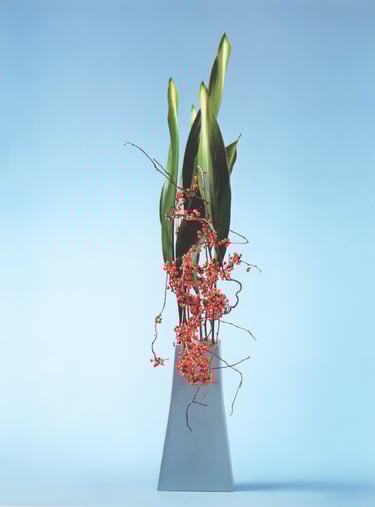
Ikebana by Kasen Yoshimura, the 1st Iemoto *
Art Gallery
Explore the beauty of Japanese flower arrangements and friendship.


© 2025 Ikebana International London Chapter. All rights reserved.